Table Of Content

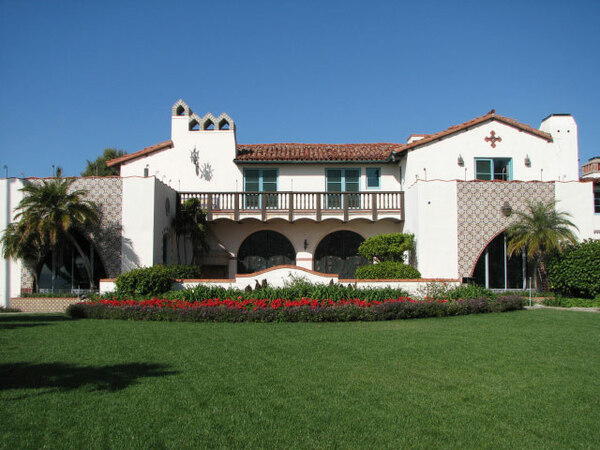
These three bedrooms open onto a large upstairs patio with the home's most spectacular panoramic view of the ocean, the Malibu lagoon and the coast in both directions. The fourth bedroom upstairs is at the eastern end of the second floor and looks out of a large Dombeya tree that blooms with spectacular bright red flowers in the spring. The Spanish Colonial Revival style home—today a National Historic Site, California Historical Landmark, and a California State Park—casts a magical spell, allowing visitors to evoke old California in a way few places can. Built in 1929, it occupies one of the most idyllic oceanfront spots in all of Southern California.
Polychrome Historic District
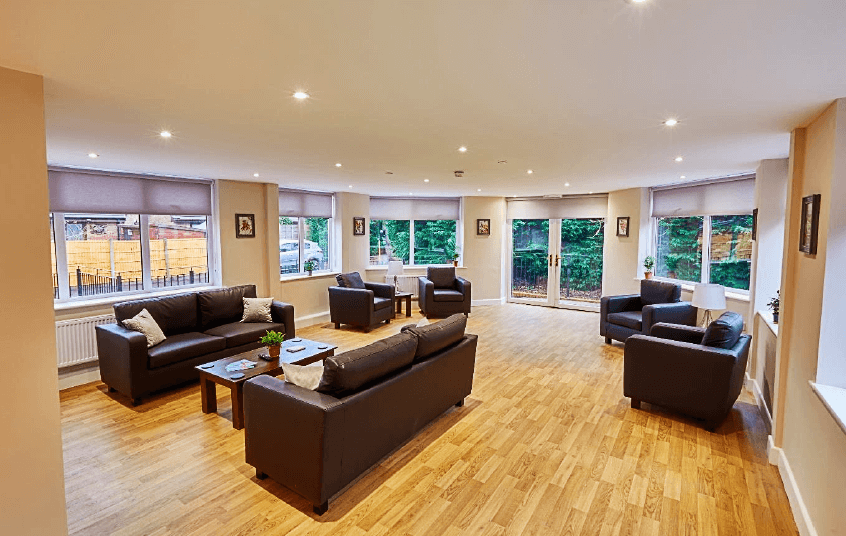
A prominent businessman with diverse interests, Rindge was a romantic at heart. So enamored was he with his new property, one that eventually became a working cattle and grain-raising ranch, that he wrote several small books in praise of its charms and beauty. Notable among them is Happy Days in Southern California, available in the Malibu Lagoon Museum Visitor Center.
Historic designations
From Santa Monica, follow the Pacific Coast Highway 13 miles west. From the 101 Freeway, exit at Las Virgenes Road, proceed 10-miles west through Malibu Canyon, turn left at Pacific Coast Highway, travel 1.5-miles east. Walk east across the bridge and follow the dirt lane at to the Adamson House. It has been called the "Taj Mahal of Tile" due to its extensive use of decorative ceramic tiles created by Rufus Keeler of Malibu Potteries. The house was built in 1929 for Rhoda Rindge Adamson and Merritt Huntley Adamson, based on a Mediterranean Revival design by Stiles O. Clements of the architectural firm of Morgan, Walls & Clements.
Clowning for Novices: History and Practice With Rose Carver
Adamson House: Centerpiece of Old Malibu - The San Diego Union-Tribune - The San Diego Union-Tribune
Adamson House: Centerpiece of Old Malibu - The San Diego Union-Tribune.
Posted: Fri, 20 Apr 2012 07:00:00 GMT [source]
Most of the artifacts in the home are original to the family, which is a rare find in Southern California historic home museums. Malibu Potteries closed in 1932 after a fire devastated the factory. Though the Adamson House holds a history much richer than the sum of its tiles, its the best place to view the legendary company’s work. Constructed in 1929 by May Knight Rindge and Frederick Hastings Rindge, the estate’s history is a story of Malibu’s modern development. At the turn of the century, the Rindges purchased over 13,000 acres of land that encompassed all of Malibu and included Spanish-settled terrain. The couple raised a family on the land and conquered local commerce, opening a dairy farm and in 1926, Malibu Potteries.
In fact their three children; Frederick Jr., Samuel, and Rhoda enjoyed life on the ranch. The home is open for docent led tours Wednesday to Saturday from 11 a.m. Tours are canceled on rainy days.Payment for tours must be in cash. Malibu's historic Surfrider Beach was one of the first places where modern surfing culture developed. To the east, the famous Malibu Pier offers fishing, restaurants and views of the surf. At the Malibu Lagoon day use area, visitors will find picnic tables and nature trails, excellent for bird watching and the study of a unique tidal wetland ecosystem.
Remodeling House of Blues’ Sound - Mix
Remodeling House of Blues’ Sound.
Posted: Fri, 14 Apr 2023 07:00:00 GMT [source]
The lavish use of tile and other distinctive decorative elements is also discussed. The house and grounds share one of the most beautiful beach locations in Southern California where one can view the Malibu Lagoon, Malibu Beach and the Malibu Pier. In addition to its world-famous Malibu Tile, the house contains hand-carved teakwood doors, hand-painted murals, molded ceilings, hand-wrought filagree ironwork and lead- framed bottle glass windows. He described the Malibu coast as the "American Riviera." He built a ranch house there, which burned to the ground in 1903. Everyone and everything came in by horseback or boat, or by horse-drawn wagon, over packed sand, at low tide.
To provide for the inspiration and education of our visitors through interpretive activities and to assist in the preservation of the historic Adamson House. To protect the park’s extraordinary biological diversity and its most valued natural and cultural resources. To maintain ongoing and updated information of said cultural and natural history pertaining to all aspects of the Museum and House. To assist financially through fundraising activities in accomplishing the above objectives and purposes. The State of California purchased the property in 1968, intending to raze the buildings to make way for additional parking for beach goers.
Rhoda inherited her mother’s determination to carry on as a widow, adeptly managing Adohr Farms and assuming other of her late husband’s business affairs. Rhoda, May Rindge’s only daughter, left California to attend Wellesley, but only for one year. She met Merritt Huntley Adamson when he became superintendent of her family’s Malibu ranch after graduating from USC Law School. Merritt, the son of an Arizona legislator and sheep rancher, earned the nickname “Smoke” after becoming a “blood brother” of the Havasupai tribe that shared boundaries with his family’s ranch.
Over the course of 20 years, her determined battles to keep the Malibu a private family estate, free of public roads, earned her the title “Queen of the Malibu”. Eventually, she lost the fight when the county and state obtained a right-of-way, and the Roosevelt Highway, now the Pacific Coast Highway, opened in 1926. Malibu Potteries specialized in ceramic tiles that were influenced by an array of world cultures and featured ornate designs that included nautical motifs and birds of paradise. Tiles produced in the factory adorn the walls of the Los Angeles City Hall, The Roosevelt Hotel, and the Mayan Theater. California State Parks has a valuable relationship with more than 80 cooperating associations authorized pursuant to Public Resources Code 513. These non-profit charitable organizations are dedicated to enhancing the educational and interpretive programs in California State Parks.
Farming was his forte and he established Adohr (his wife’s name spelled backward) Stock Farms, which became one of the world’s largest milk producers. May Rindge’s bold strokes in business and public affairs, especially during a time when such actions were considered unladylike, earn her status as one of California’s history-shaping women. Rindge, a prominent business leader, philanthropist, and much-loved husband and father, died in 1905 at 48. His widow, May Knight Rindge, assumed stewardship of her husband’s business affairs, including the ranch, a property often referred to as “the Malibu”.
In 1971, the Chancellor of Pepperdine University moved in to Adamson House as part of an effort to maintain the house until it could be properly restored. The Malibu Historical Society was formed to preserve the house, which became a California Historical Landmark in 1985. The Malibu Lagoon Interpretive Association, now known as Malibu Adamson House Foundation, was formed in 1981 and presided over the opening of the house as a museum in 1983. However, the Adamson family lifestyle wasn’t without leisure pursuits, with a spacious patio, lawn, barbecue area, and swimming pool gracing the east side of the property.
Holiday tours and a tile-making event in October are just a few of these. The adjacent Malibu Lagoon Museum allows visitors to walk through the history of the area from the regional capital of the Chumash tribe, to the early Californio ranchos and later, the American gentleman’s ranches, to the birth of the surfing era. Museum docents give delightful tours filled with historical anecdotes.
In little more than 20 years, the Rindge Ranch became, it is said, the most valuable single real estate holding in the United States. Rhoda May Rindge, often called "May. K. Rindge," tried to keep highways out of her property, but the county and state obtained a right-of-way, and the Roosevelt Highway was opened in 1928. She started building a fine, Mediterranean-style, 50-room house in 1928. The Franciscan Order acquired it in 1941, along with 26 acres of land and tile, valued at $40,000. When May Knight Rindge gave her daughter 13 acres of her coveted land, the couple pursued building a beach house. Spanish architecture seemed a natural choice for the young couple as Rhoda had grown up surrounded by themes of Spanish pioneers and Merritt’s childhood had been steeped in an Old West atmosphere.
Rhoda’s visionary father, Frederick Hastings Rindge, the last owner of Malibu, was a wealthy Easterner who attended Harvard, and bought the property in 1892 for roughly $10 an acre. (Thirty years later, it became the most valuable single real estate holding in the United States.) He and his wife, a schoolteacher from Michigan, had married and moved to California five years earlier, settling in Santa Monica. With the purchase of this land, Rindge sought to create an ideal country home, one to rival seaside showplaces he had visited in France and Italy.
Associations are related to, but independent of the state parks they serve. California State Parks encourages you to visit these websites, but does not guarantee the content, timeliness or accuracy of the materials on these sites. Malibu Adamson House Foundation has saved this historic home and become a valuable asset to visitors and staff at Malibu Lagoon State Beach/Adamson House. For support and membership information, please visit the Malibu Adamson House Foundation at Tours of the Adamson House introduce students to how a family lived in the 1930s and invite comparisons to present-day life and society.


No comments:
Post a Comment